




Destination guide
Italy

Food, scenery, skiing. Mostly in that order.
The full Snow Dragon guide to skiing in Italy
For skiers who want the full detail on regions, resorts, snow reliability, restaurants, convenience, travel and where to stay.
Two Italys
Two distinct ski experiences. Which one is right for you?
Italy is two distinct ski countries sharing borders and a flag, and understanding which one you're heading to matters a great deal.
The western Alps, accessed mainly via Turin or Milan, offer dramatic high-mountain terrain, a handful of quality resorts, and a skiing culture shaped by Italian domestic tourism, weekend crowds, and an atmosphere that is recognisably, emphatically Italian.
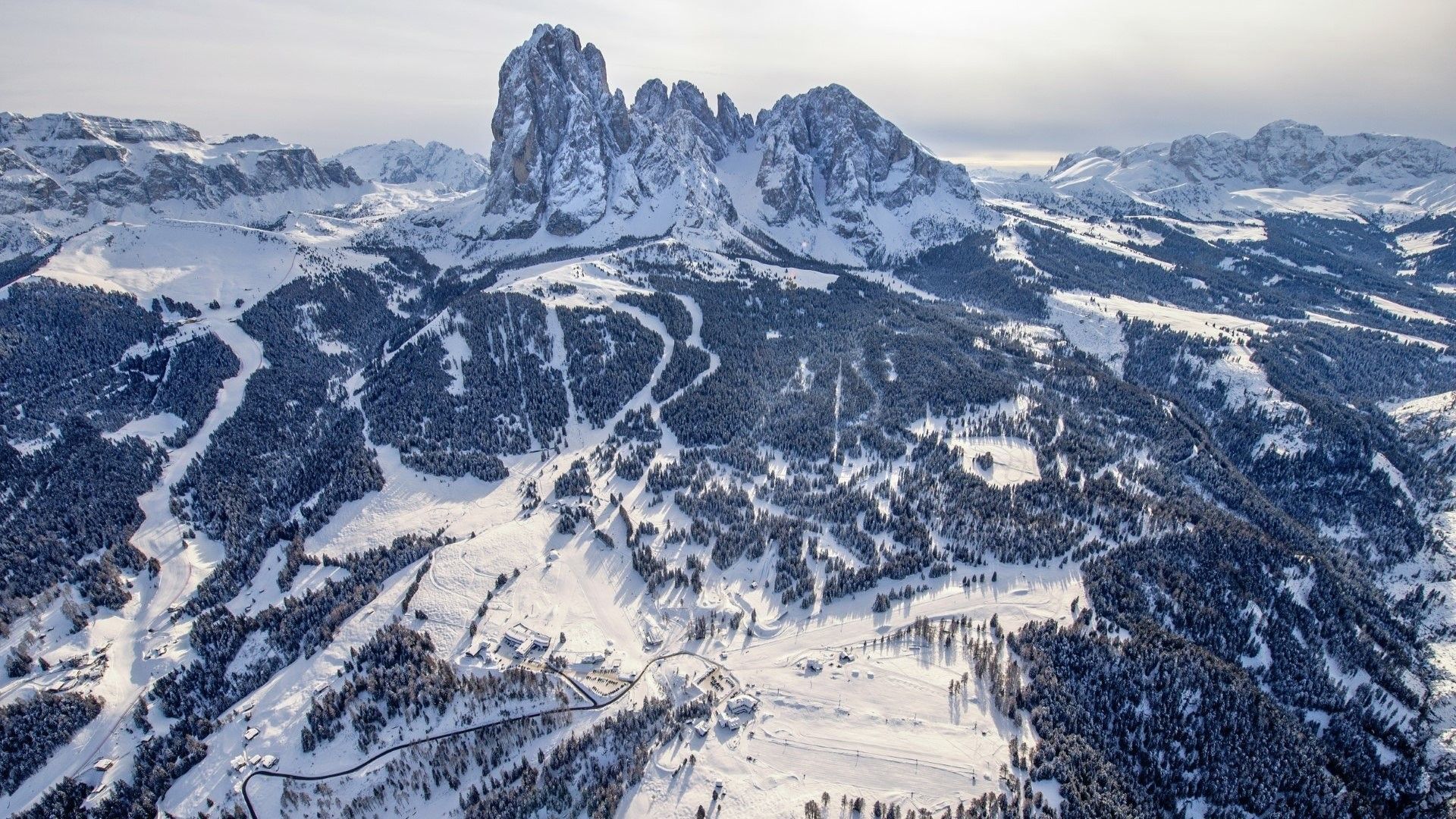
The Dolomites in the east, generally reached via Verona, Venice or Innsbruck, are something else: a UNESCO World Heritage landscape of pale limestone towers, a trilingual culture in South Tyrol that is as much Austrian as Italian, food that belongs in a different conversation entirely, and a skiing character built around scenic cruising rather than steep challenges.
Both are excellent. They are not interchangeable.
What they share is a seriousness about eating that Austria cannot quite match and France rarely bothers to try. The mountain restaurant in Italy, whether a wood-panelled hut in Val Gardena or a sun-terrace trattoria above Courmayeur, is not an afterthought. It is part of the point. Budget the time accordingly and resist the temptation to eat quickly and get back on the piste. You will not regret it.
Prices are, in general, lower than France and Switzerland, though the gap has narrowed in the more fashionable resorts.
Snowmaking is extensive and heavily relied upon, particularly in the Dolomites where natural snow can be feast or famine. Lift systems are variable; some resorts have invested heavily; others are working through infrastructure that belongs to decades past.
The après-ski scene is, with a few exceptions, considerably quieter than Austria. Italy rewards those who ski well and eat well. The evening tends to take care of itself at a more civilised pace, in more suitable attire.
Higher, steeper, more challenging
Best for: advanced skiers, value for money, snow-sure conditions
Western Alps
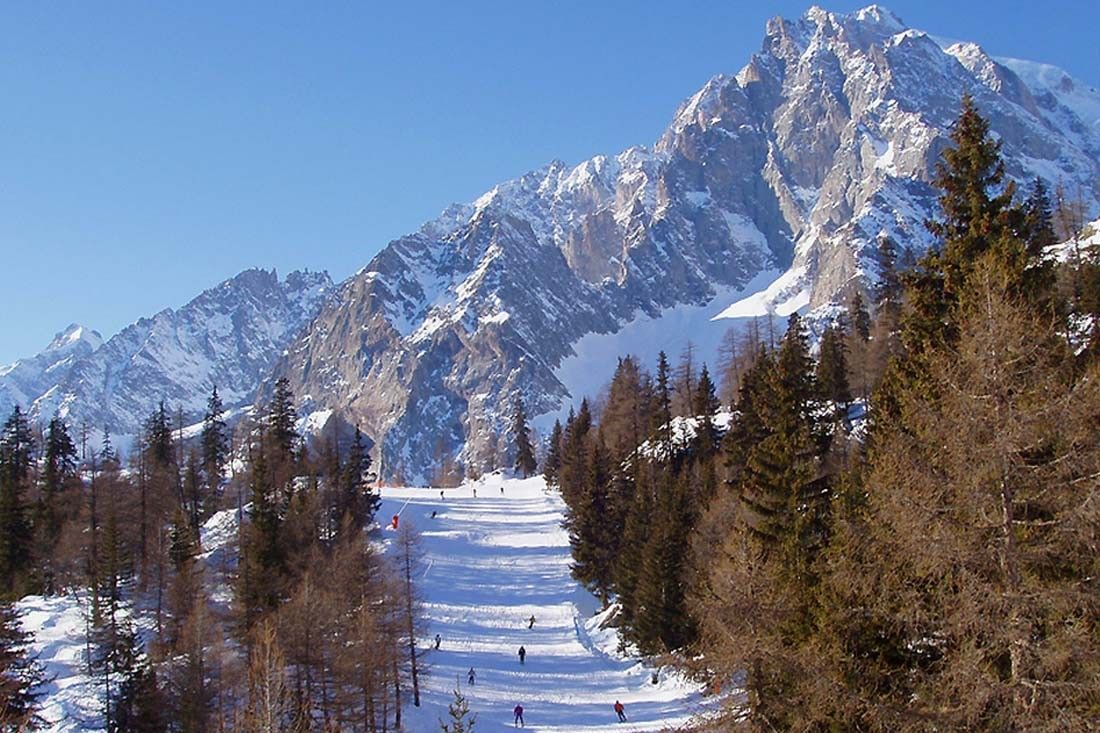
The western resorts, concentrated in Valle d'Aosta and Piedmont, sit in the shadow of Mont Blanc, the Matterhorn, and Monte Rosa. The terrain is high, serious, and often genuinely challenging. Courmayeur faces Mont Blanc across a valley; Cervinia shares a glacier and a lift system with Zermatt; the Via Lattea spreads across five valleys from Sestriere, a 2006 Olympic host.
The villages, with some exceptions, have the character of Italian mountain towns rather than purpose-built resorts. The food is reasonably priced and tasty. The skiing, at its best, is as impressive as anything across the Swiss and French borders. The atmosphere is Italian in the way that matters: unhurried, convivial, occasionally chaotic in an endearing way.
Scenic, cruisy, more relaxed
Best for: intermediate and mixed-ability
The Dolomites
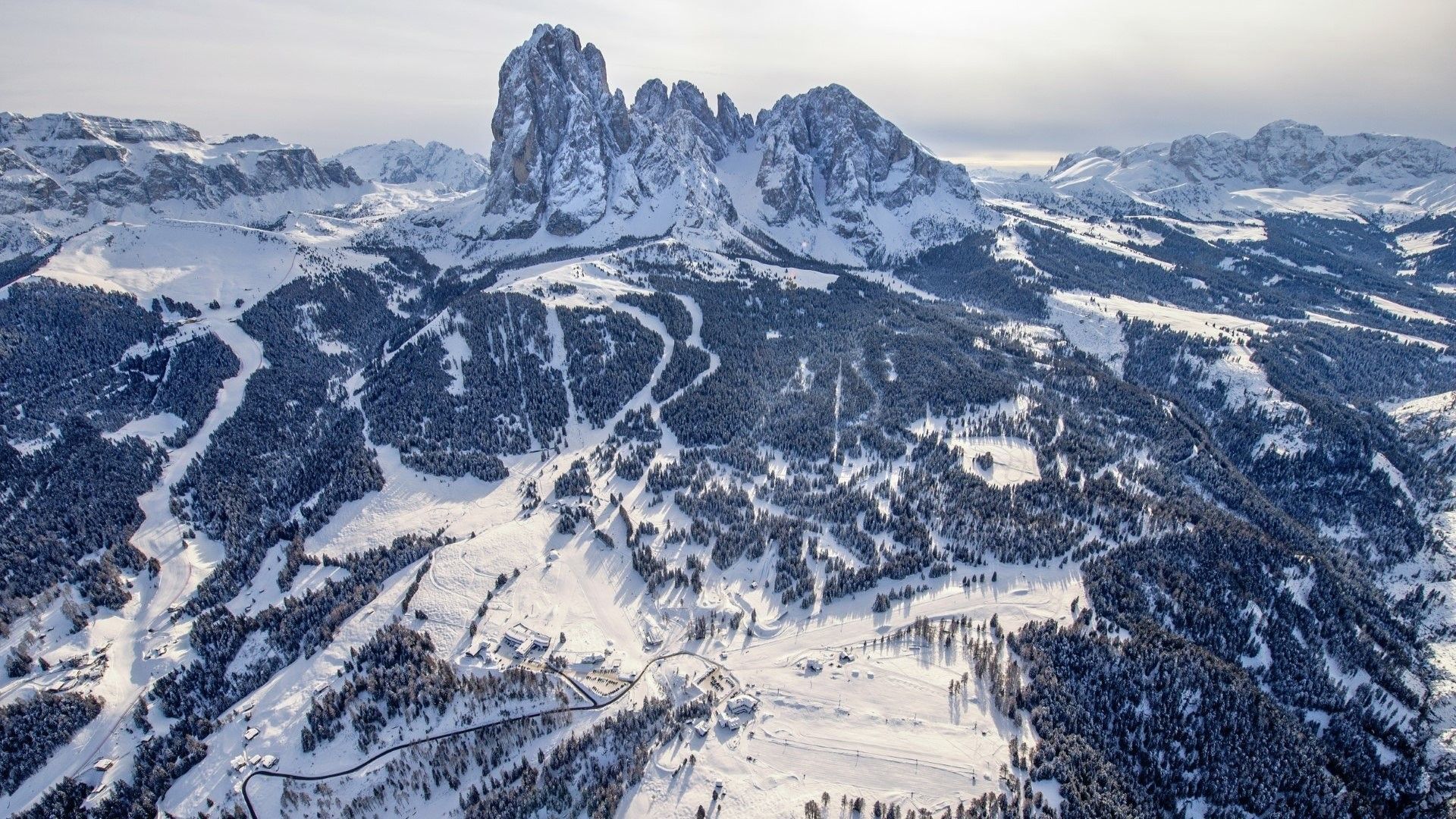
The Dolomites operate at a different frequency entirely. The landscape dominates, and leaves you in awe all week: the vertical limestone towers catching the last light, the wide open plateaux, the sense of skiing inside an almost painfully pretty painting.
The South Tyrol culture adds a layer that surprises visitors who arrive expecting conventional Italy. German is the first language in Alto Adige; Ladin is spoken in the Gardena and Badia valleys. The food reflects all three traditions, and is usually better for it. The skiing is predominantly gentler than in the west, built around scenic circuits radiating from multiple villages, rather than long steep descents. The Sella Ronda, the famous loop around the Sella massif, is one of the great days out in European skiing. The Dolomiti Superski pass connects twelve resorts and claims over 1,200km of pistes (not to be done in one trip).
Popular resorts in Italy
Explore some of our most popular resorts.
Western Alps
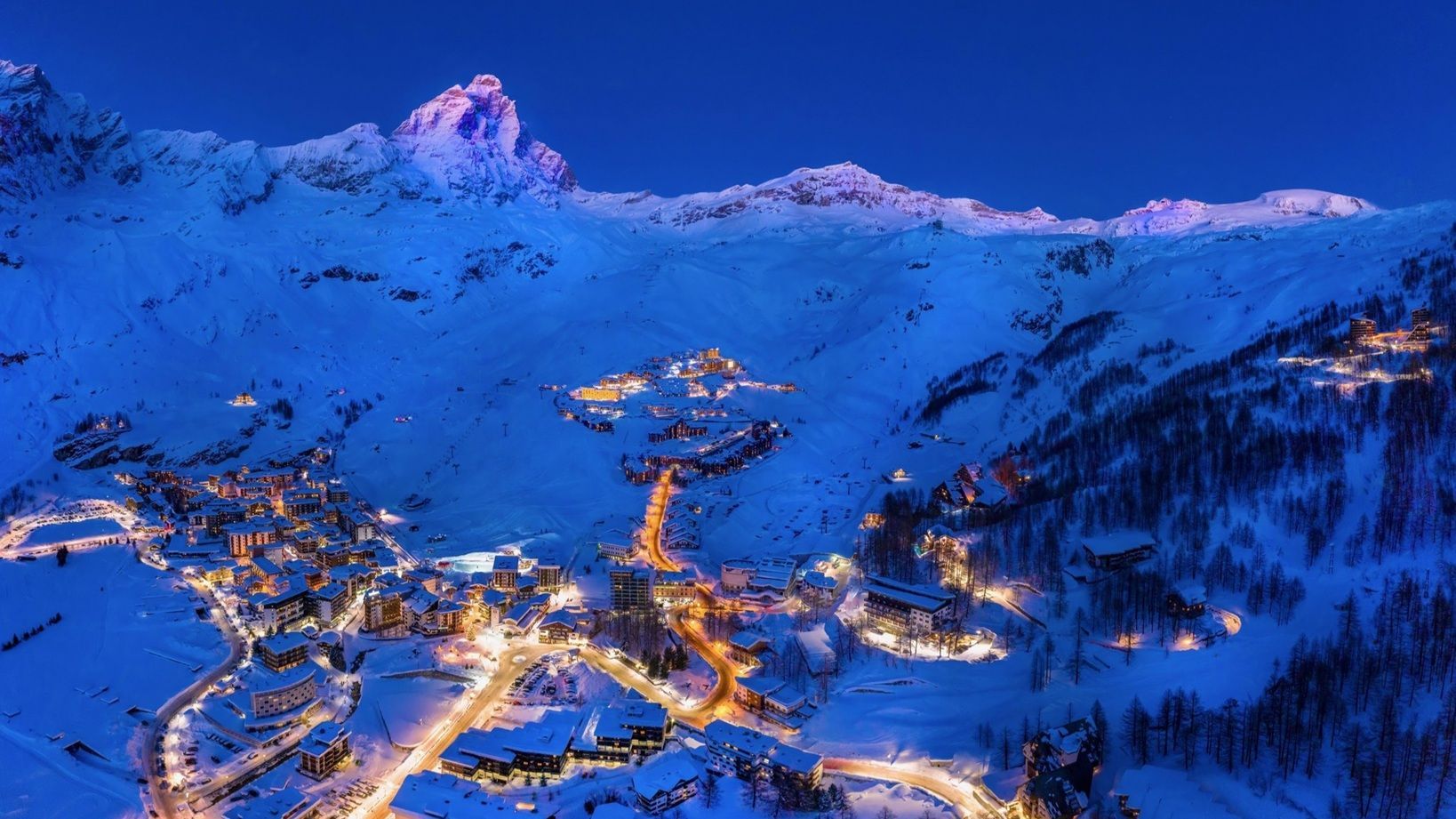
Courmayeur
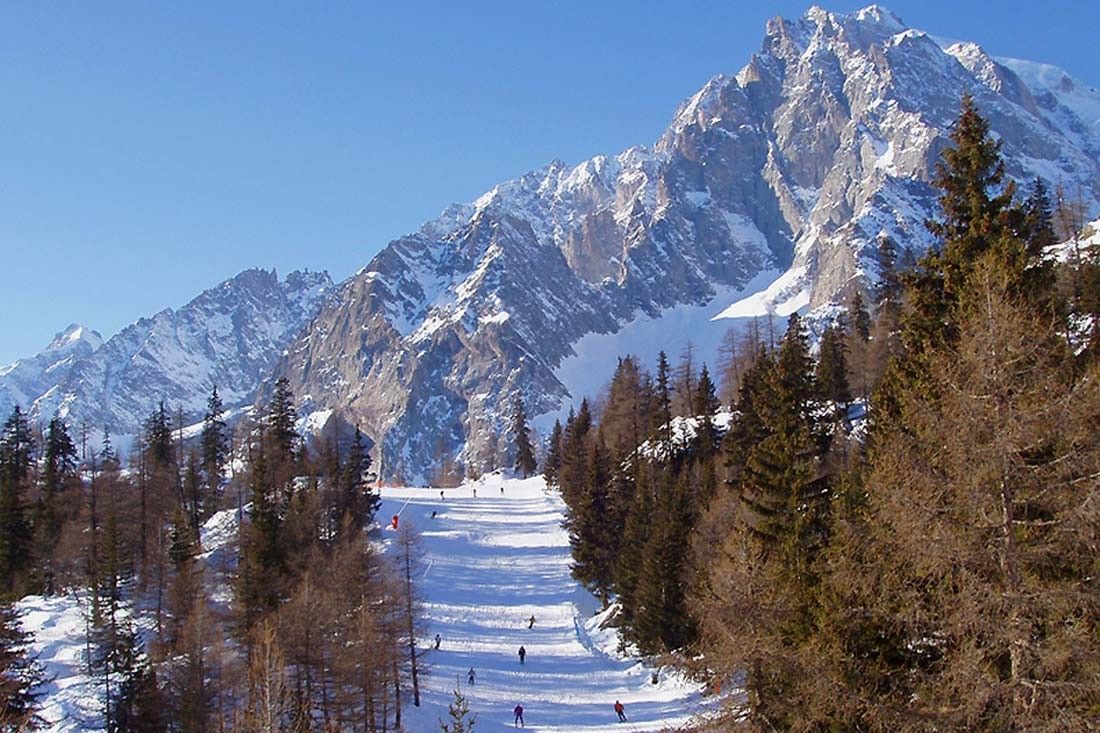
Faces Mont Blanc across the valley (high, serious terrain with an unmistakably Italian village atmosphere).
Western Alps
Cervinia
Shares a glacier and lift system with Zermatt (one of the best snow records of any resort in the Alps).
Western Alps
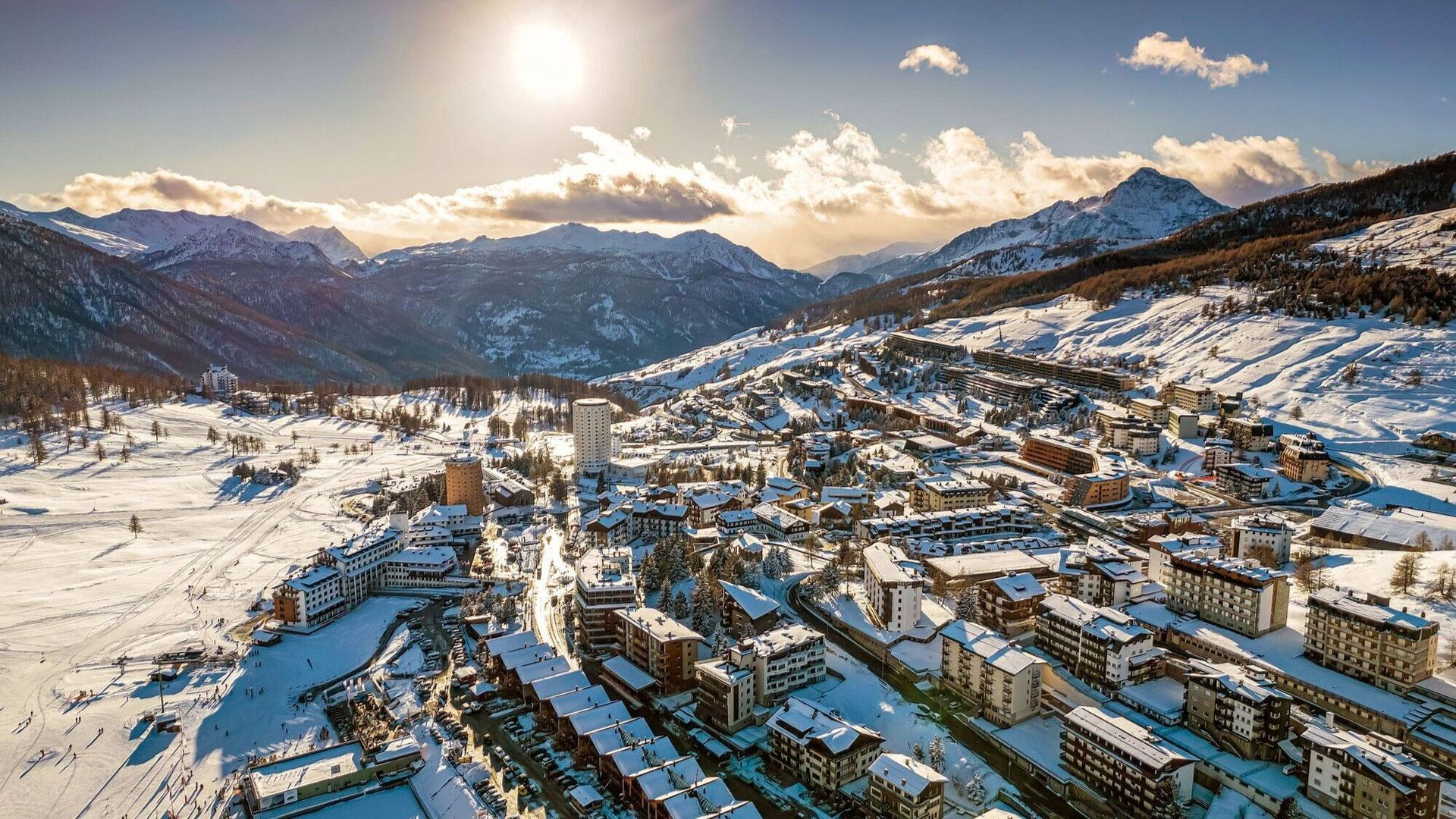
Sestriere
A 2006 Olympic host at the heart of the Via Lattea, the largest linked ski area in the western Alps.
Dolomites
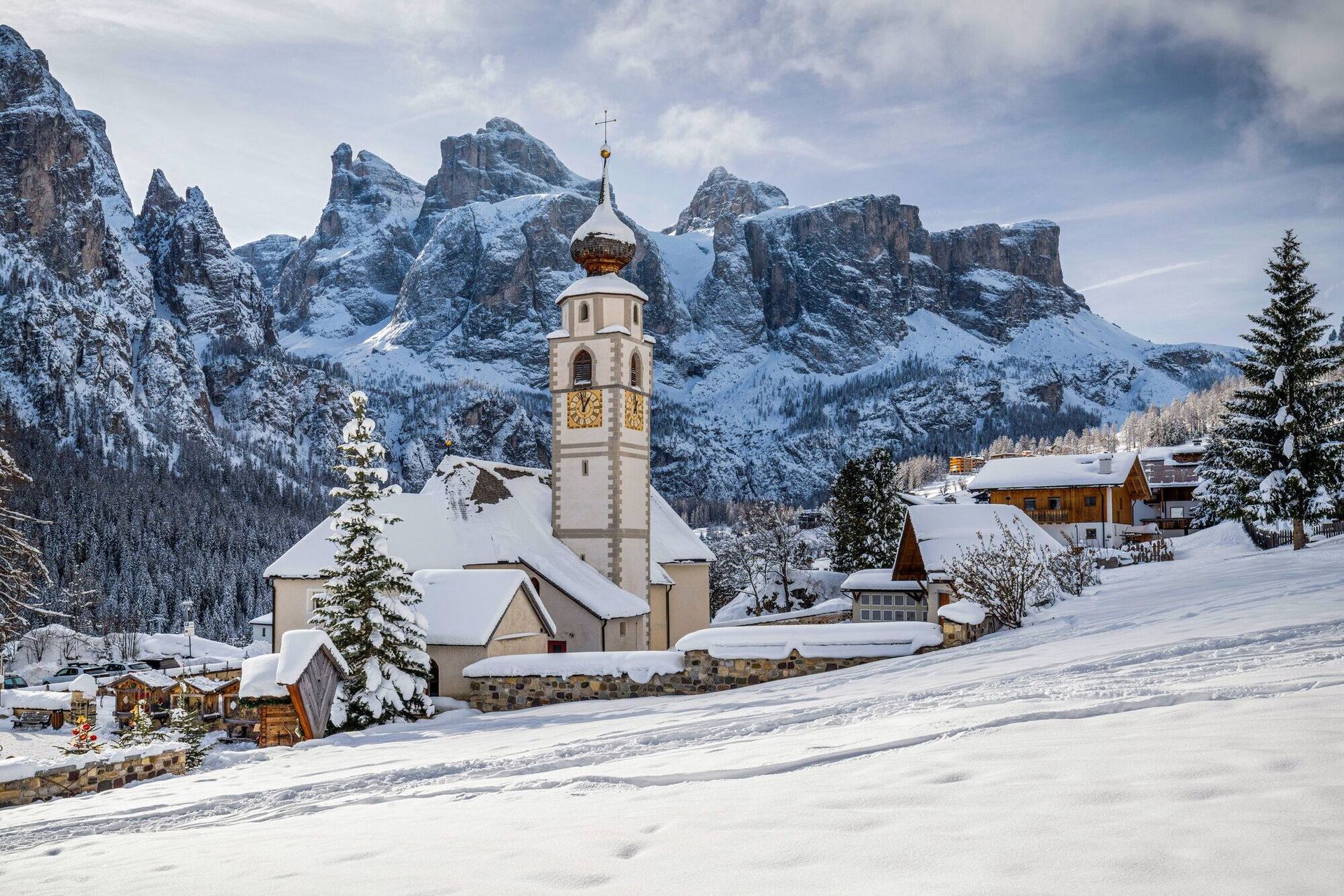
Alta Badia
A cruiser's paradise on the Sella Ronda circuit, with some of the best mountain restaurants in the Alps.
Mountain restaurants
This is where Italy separates itself from the rest of the Alps, and it's not really a competition.
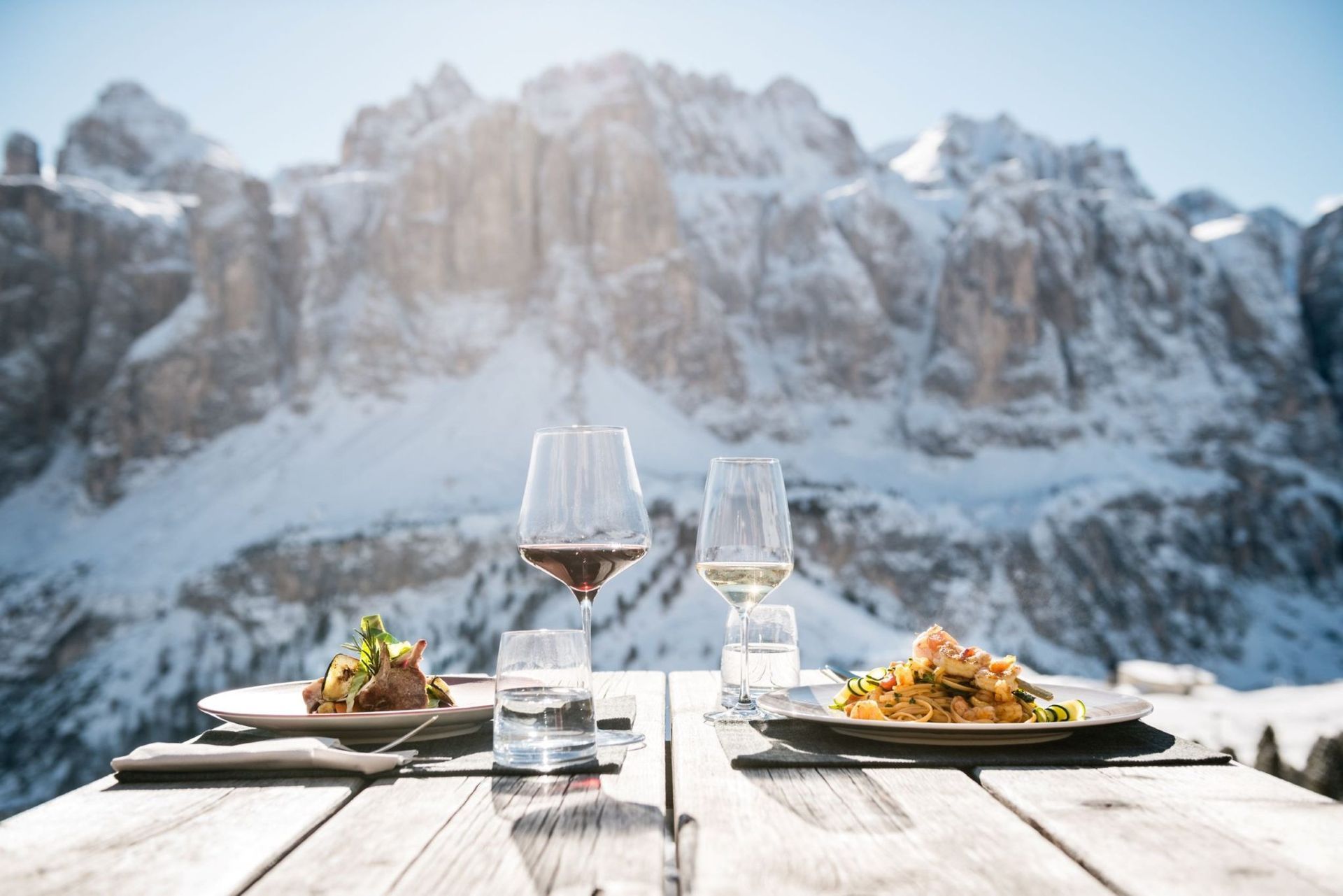
In the Dolomites, and particularly in Südtirol, the mountain restaurant is a serious institution. The stube tradition, which is to say a wood-panelled room with considered cooking and a wine list that reflects the region's genuine viticulture, produces lunches that are straightforwardly among the best available at altitude anywhere in Europe. Venison ragù, local cheeses, and the Kaiserschmarrn that Austria also claims but Südtirol has perfected: the food here is excellent, and the setting frequently truly adds to the experience.
In the western Alps, the register is different but no less rewarding. Polenta, pasta, risotto, local cured meats, the simplicity of good Italian ingredients prepared without fuss: the trattoria above La Thuile or the rifugio above Cervinia is not trying to be a Michelin-starred restaurant, and doesn't need to be. The quality of the underlying ingredients carries the day.
Reservations are possible in Italy more often than elsewhere, and worth making at the better-known spots, particularly in peak weeks. Table service is pretty much standard. The pace of lunch is unhurried, which is either a pleasure or a frustration depending on your relationship with the afternoon's skiing ambitions.
Choosing your resort
Italy's variety within its ski areas is rather wide — start with what matters most to you.
How big?
Dolomites
Vast, well-connected networks.
Western Alps
Some large areas, but less seamless.
Elsewhere
Lots of lovely, smaller resorts.
The Dolomiti Superski pass is the largest single lift pass in Europe by area covered, and the temptation to treat this as meaningful for a week's skiing should be resisted. What it does offer is a coherent, well-connected central network in the Sella Ronda valleys, plus a series of worthwhile outlying areas reachable by car.
In the western Alps, the Via Lattea is the largest linked system and offers plenty for a week's varied skiing. Individual resort size elsewhere in Italy varies enormously, from mid-sized Madonna di Campiglio to tiny Latemar and Crevacol.
When skiing with kids and beginners, size becomes (almost) a moot point anyway. And experienced teens may prefer terrain parks, ski cross, and timed slaloms to covering endless kilometres. And in this area, Italy, and the Dolomites in particular, excel.
How steep?
Western Alps
Steeper, more challenging.
Dolomites
Mostly intermediate cruising.
The central Sella Ronda valleys are predominantly intermediate, with steeper variants accessible for those who want them. Cortina is flatter than its reputation suggests. Alta Badia is a cruiser's paradise. Val Gardena's Ciampinoi and the Saslong piste are the exceptions to the gentle rule rather than representative of the general character.
In the western Alps, La Thuile offers some genuinely steep runs, mostly in the trees, and rewards confident intermediates and above. Cervinia's glacier terrain is high and wide but not technically demanding. The Via Lattea is varied enough to suit a broad ability range across its full extent.
How high?
Western Alps
Higher, more snow-sure.
Dolomites
Lower, but excellent snowmaking.
The altitude advantage in Italy sits mostly in the west. Cervinia's village is at over 2,000m and the skiing extends to 3,480m on the shared glacier with Zermatt, giving it one of the best snow records of any resort in the Alps.
The Dolomites are more modest in altitude, with most villages between 1,000m and 1,800m, and, combined with erratic snowfall, makes snowmaking not a luxury but a necessity. It is thorough and reliable, but the underlying vulnerability to warm spells is worth knowing about, particularly for spring bookings.
How convenient?
Village charm
Mostly village-based skiing.
Lift access
Some near ski-in/out. Walks to the lifts are generally quite short.
Italy's resorts divide, broadly, into two categories: traditional valley villages where the skiing is above and a lift ride or short walk away, and a small number of purpose-built or high-outpost alternatives. Ski-in, ski-out is rare in the full sense. Several Dolomite resorts offer slope-side hotels that come close, and the compact layout of resorts like Selva and Colfosco allow short walks to the lifts from most accommodation.
In the western Alps, the village-to-lift relationship varies by resort; Pila, Cervinia and La Thuile all have accommodation bordering on walk-out, ski-in. Purpose-built resorts like Sestriere exist, but they trade Italian charm for convenience. On the flip side, resorts like Cortina d'Ampezzo trade wonderful village life and charm for long plods to the lift station or, more often, the nearest bus stop.
How good for families?
Ski schools
Excellent, and a relaxed culture around kids.
Confidence
Gentle terrain is great for building it.
Italy is, in general, an excellent family destination, for reasons that go beyond the skiing. Italians adore children, the ski schools are excellent (and multilingual as a matter of course), and the often gentle terrain is great for building confidence. While you might not find the specific logistics of a French "Kids' Club" everywhere, the general warmth and the fact that kids are welcome in every restaurant until late at night makes for a very low-stress holiday.
Skiing in Italy may be a different kind of holiday, requiring slightly different planning to elsewhere in Europe, but it is definitely worth it.
What sort of lodgings?
Hotels
Dominate (great value and food).
Chalets / apartments
Chalets rare, good apartments available.
Hotels dominate, from four-star properties to family-run three-star hotels and garnis that represent some of the best value accommodation in the Alps.
Self-catered apartments are available in most resorts but are not the default offering in the way they are in France. The family hotel, attentive and personal in the way that larger properties rarely are, is Italy's genuine accommodation strength, and the gap between a good Italian three-star and its French equivalent is often wider than the star ratings imply.
The British-style catered chalet is rare, but the quality of half-board hotel dining in Italian hotels usually more than makes up for it.
What sort of lodgings?
Size matters, to a point
How long does a resort stay interesting?
Italy's piste kilometre claims range from the honest to the brazenly fictional. Kronplatz, a single mountain above Brunico, claims figures that bear no serious relationship to reality. La Thuile, the slightly larger partner to French La Rosière in the Espace San Bernardo, went the other way and had its piste kilometres independently verified.
The Sella Ronda circuit, the honest measure of what is conveniently skiable from the central valleys in a day, is around 40km. That is still an excellent day out.
In the western Alps, the Via Lattea is definitely large, including French Montgenèvre, but the cross-valley link from San Sicario is so slow and clunky that it is largely irrelevant (if you are better off driving between them, it's really a regional lift pass rather than a linked resort).
Cervinia's glacier terrain, combined with the Zermatt link, creates one of the most extensive high-altitude ski areas in Europe, though the Italian side alone is more modest than the combined claim implies.
The more useful question, as always, is how many days a ski area sustains interest before it repeats itself. A resort with varied terrain, good bad-weather options, and a regional pass that opens up neighbouring valleys will outlast a larger resort with nothing but straightforward pistes and no shelter when the clouds come in.
Italy is reasonably well set up for multi-resort weeks in both the east and the west, though the infrastructure for moving between resorts is more developed in the Dolomites than in the western valleys.
Escaping the crowds
Western Alps
Busy at weekends.
Dolomites
Generally busy throughout peak season.
Off the beaten track
Some excellent quieter options.
The South Tyrol and Trentino Dolomite resorts draw a more international, advance-planning crowd that spreads more evenly across the season; the western Italian Alps serve a large domestic market of weekend skiers from Turin and Milan that concentrates very heavily on weekends and a few Italian public holidays.
On a busy weekend at Sestriere or Cervinia, the lift queues are real, the piste congestion is real, and the mountain restaurant situation requires either an early lunch or considerable patience.
The broader strategy for anyone sensitive to crowds is simply to ski these western resorts midweek. Italian domestic tourism drops sharply Monday through Friday, and the difference in atmosphere and on-piste comfort between a Wednesday and a Saturday in the western Alps is more dramatic than in most European ski nations.
If you want to avoid the obvious choices, look beyond the Sella Ronda and the biggest western names. Resorts such as Champoluc, La Thuile, Crevacol and parts of Monterosa can offer a quieter, more local Italian ski experience (often with excellent skiing and far fewer people).
They are not always the easiest resorts for nightlife, non-skiers or first-timers, but for confident skiers who value space over scene, they can be exactly the point.
Getting to Italian resorts
Western Alps
Easy access, mostly from Turin and Milan.
Dolomites
Several airport options, but transfer times vary considerably.
Airports
The western resorts are served primarily by Turin and Milan Malpensa, with reasonable transfer times to resorts. Geneva covers the northern Valle d'Aosta resorts from the French side and is, for some itineraries, the most practical option despite the pricey border tunnel crossing.
The Dolomite resorts require more thought. Verona, Venice and Bolzano are good options for most resorts even though Austrian Innsbruck may be closer. The distances involved mean that transfer times vary considerably by resort.
Trains
Train travel is possible, particularly to places like Oulx (for the Milky Way) or Aosta. Kronplatz and Drei Zinnen in the Dolomites offer seamless "station-at-the-lift" integration, whilst Val Gardena is only a short transfer from the train station.
Car
Driving in Italy in winter carries the same requirements as Austria and Switzerland for winter tyres; the rules are enforced less consistently but the conditions that make them necessary are equally real. A car is not a necessity, but can be an asset in the Dolomites if you want to try different resorts, or simply a different village or restaurant for dinner.
Ski holidays in Italy